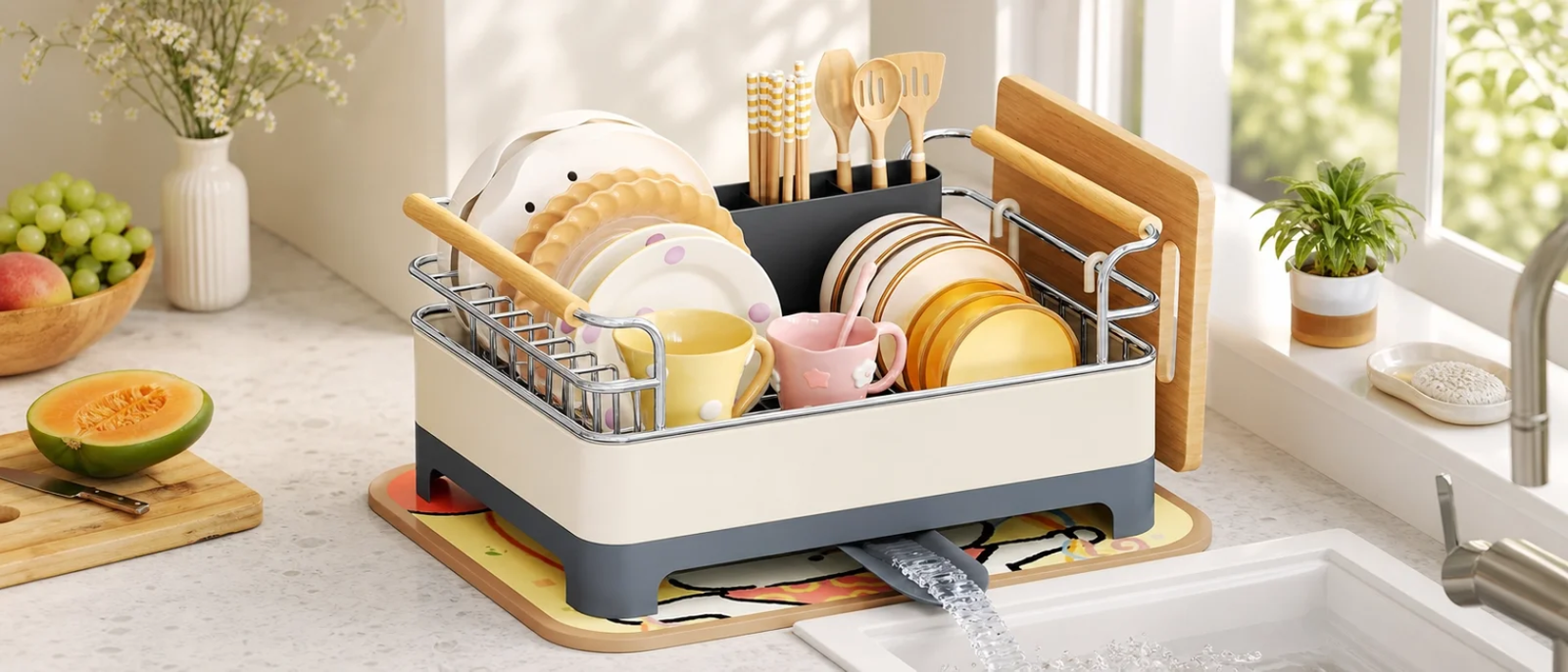
Over Sink Dish Rack Manufacturing Guide for Importers
The challenge with sourcing over-sink dish racks isn't about the steel. It's about the process. Failures in surface finishes, not material specs, lead to long-term rust complaints.
An over-sink dish rack's ability to resist rust comes primarily from the electroplating or powder coating process1, not the material thickness. Low-quality coatings account for over 80% of warranty issues in our factory's experience2.
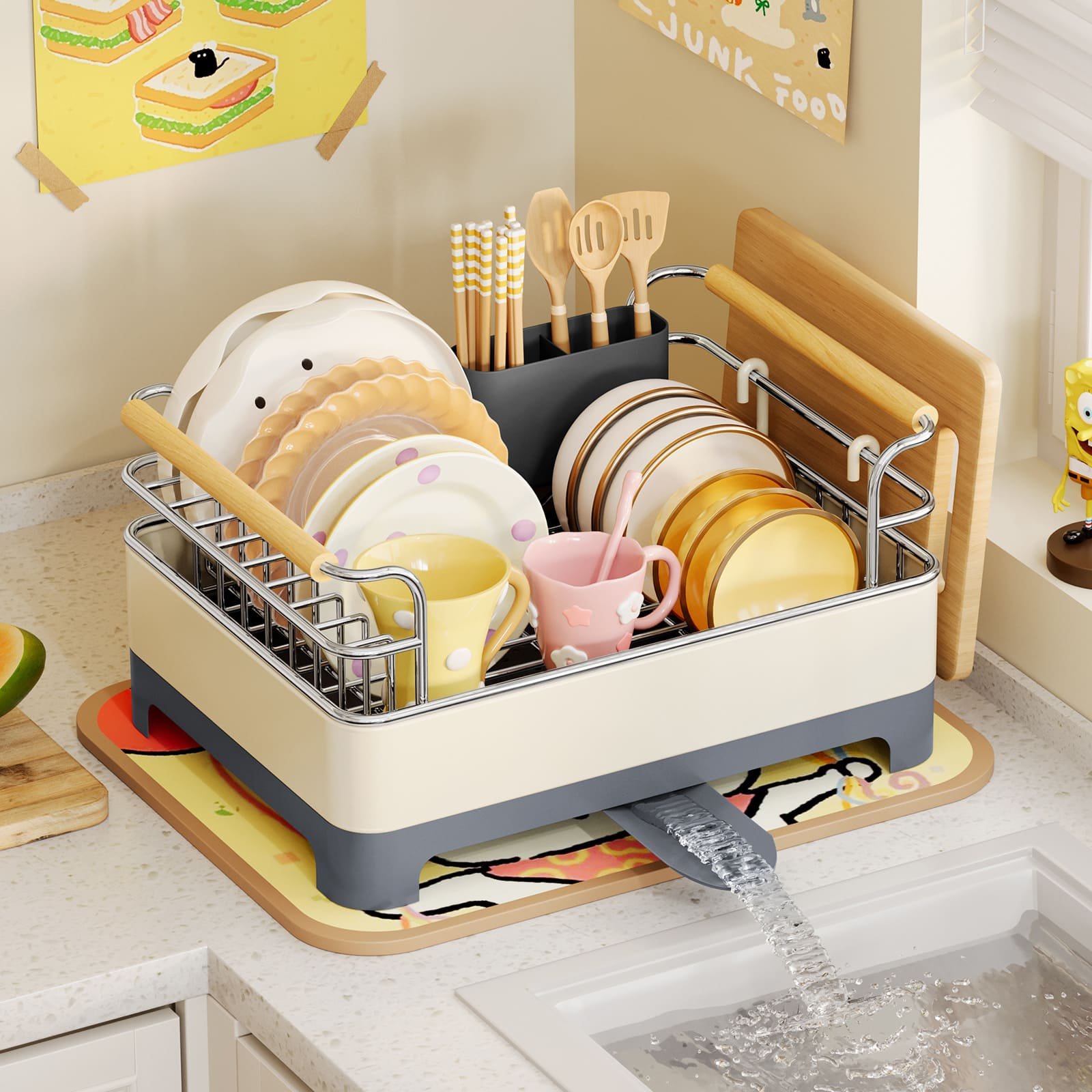
When importers work with Chinese suppliers, they often focus on materials, but surface treatment is the hidden risk. Understanding coating processes is where importers can avoid costly delays and complaints that erode their brand reputation.
Why does rust resistance depend on coating, not material thickness?
Rust issues start when buyers misjudge the root cause. Importers assume thicker steel means better durability. But rust complaints mostly stem from failed coatings during heat exposure, humidity, or salt spray conditions3.
Most rust resistance failures come from poor electroplating or improper powder coating. Steel alone can't stop oxidation4. Post-coating quality measures like baking or salt spray testing5 are must-haves for reliable performance.

In our 17 years of working with importers, the consistent finding has been that rust resistance starts with surface finish integrity—not the size or weight of the steel. Ask your supplier: Do you provide salt spray test results and baking logs after coating6?
Questions for Importers:
- Can the supplier explain their coating methodology?
- What is their bake time post-coating, and why?
- Do they test sample racks for salt spray standards (i.e., 24 hours minimum7)?
When does customization trigger tooling delays for dish racks?
Every importer wants their design tweaks to stand out in the market. But minor requests can spiral into bigger supply chain risks. Size adjustments seem easy but alter balance, weight distribution8, and sink compatibility.
Simple size changes can trigger expensive tooling modifications. Cosmetic tweaks (like color) usually take 7-14 days, but structural or ergonomic changes can extend lead times to 45-60 days9.
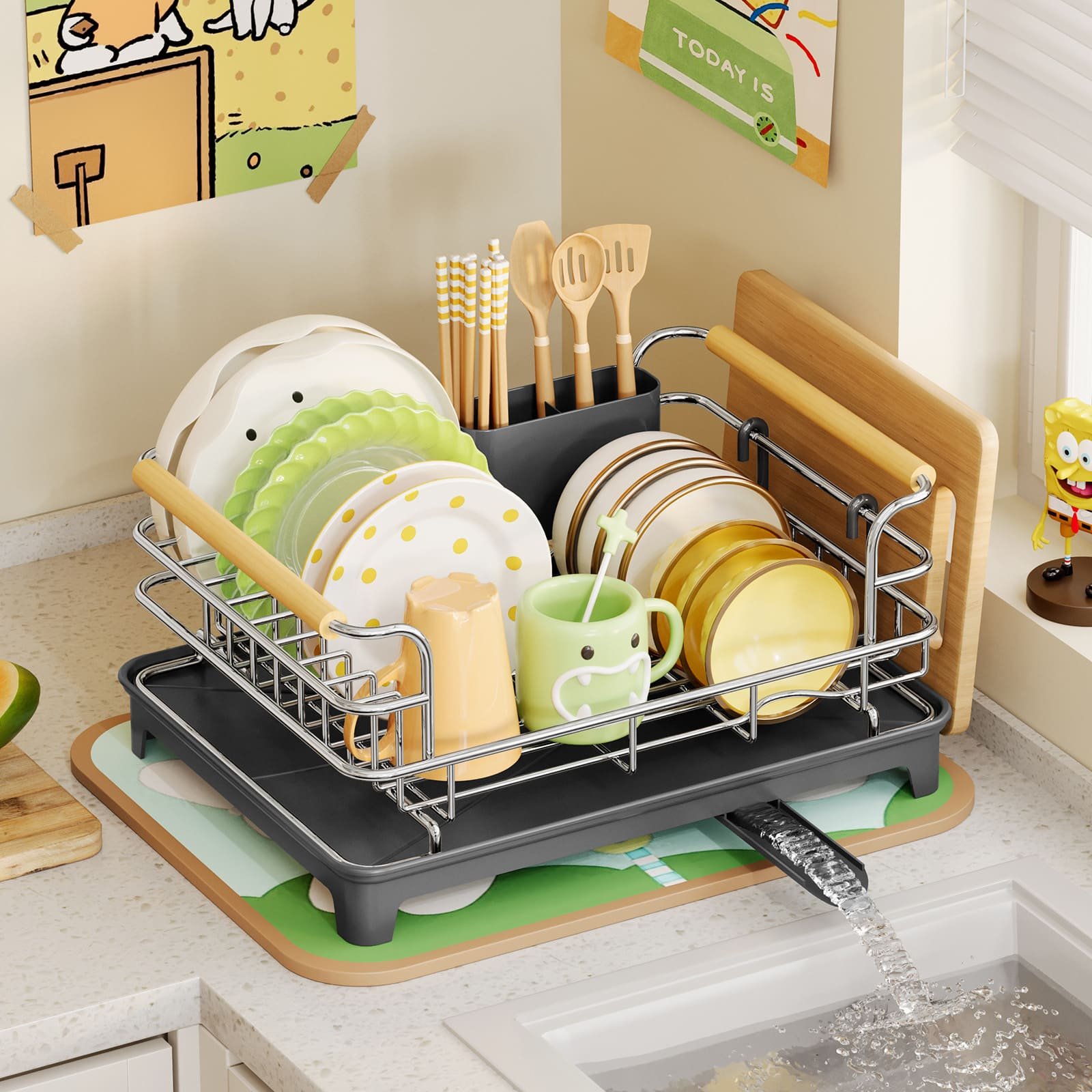
I've seen importers run into delays when assuming their customization was "just a tweak." Always ask upfront: Does this change affect weight distribution or require sink compatibility tests? Manufacturers often won't explain tooling costs unless you ask directly.
Adjustment Timeline Framework:
| Change Type | Impact on Tooling Costs | Estimated Delay |
|---|---|---|
| Cosmetic tweaks (color/finish) | None | 7-14 days |
| Dimensional/size changes | Sample testing required | 21-30 days |
| Structural redesign with molds | High tooling investment | 45-60 days |
How to vet high-risk suppliers during factory audits?
Not every supplier understands proper rust resistance methods. The ones that can't explain their production processes pose higher risks, especially for buyers prioritizing quantity and MOQ.
Suppliers who fail to clarify their salt spray test protocol or coating temperatures are often behind warranty disputes later. They may meet steel specs but fail coating standards.
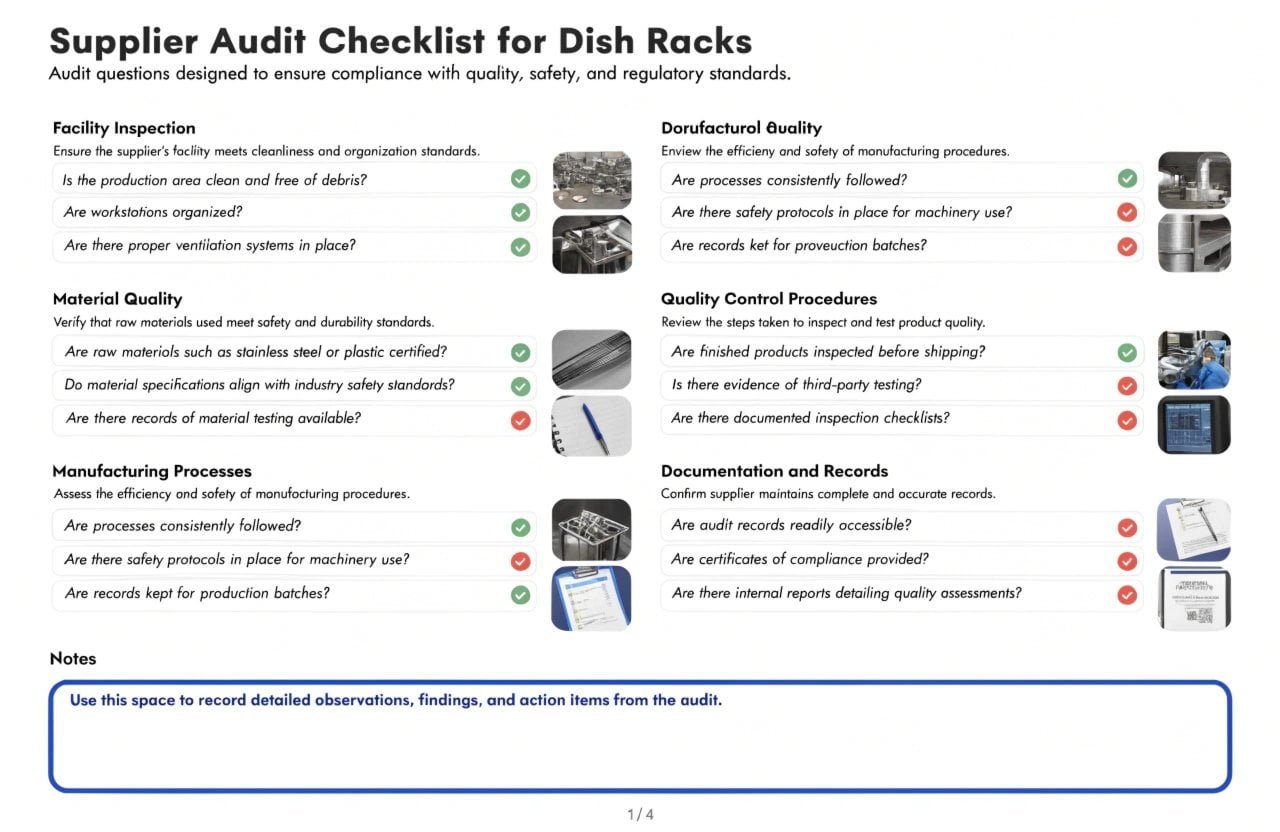
During supplier audits, ask for:
- Salt spray test reports (minimum 24 hours).
- Post-coating baking logs (temperature profiles).
- Electroplating certifications (if applicable).
- Samples proving coating adhesion under stress10.
If they can't show these, they're likely high-risk. Rust complaints will cost you more than upfront tests.
Why lead times matter for importers customizing dish racks?
MOQ negotiations don’t apply universally during customization. Importers often misinterpret this when requesting non-standard designs. Suppliers compensate for structural changes with new molds, which don’t just add costs—they extend lead times significantly.
Structural design changes requiring molds shouldn’t be treated like tweaks. Expect 30-60 day production delays for major adjustments.
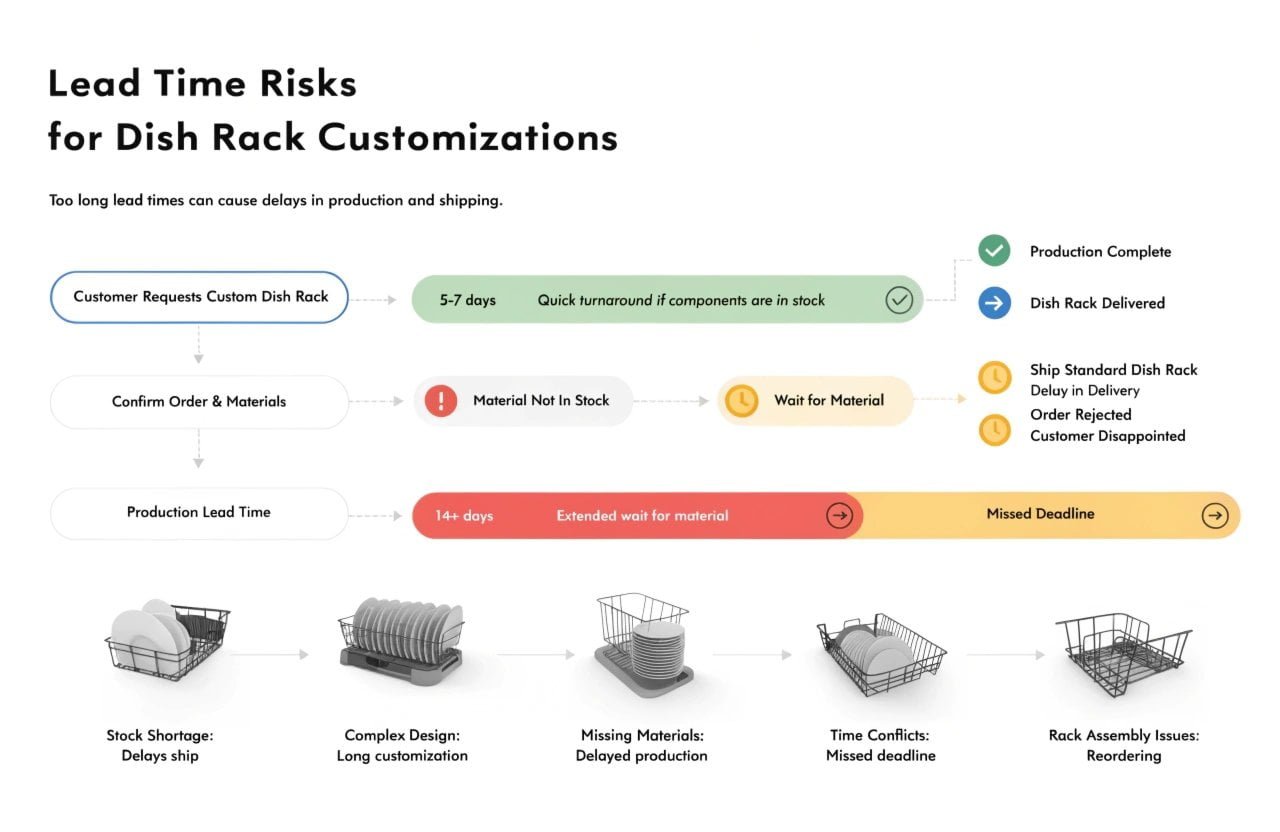
For importers looking to stand out in the market, customization is key. But skipping realistic lead time discussions will leave you with frustrated deadlines. Always ask: Was this adjustment cosmetic or structural, and how does tooling impact my timeline?
Simplified Lead Time Adjustments Chart:
| Adjustment Type | Typical Time Added | High-Risk Impacts |
|---|---|---|
| Cosmetic Designs | 7-14 days | No risk |
| Dimensional Tweaks | 21-30 days | Delays from testing |
| Structural Redesigns | 45-60 days | Significant investment |
Conclusion
Surface finish dominates rust resistance for over-sink dish racks—not material specs. Importers must prioritize coating processes, tooling timelines, and supplier audits for reliable supply chains.
"The Advantages of Metal Powder Coating - Highland Machine", https://highlandmachine.com/what-is-powder-coating/. Electroplating deposits a thin metal layer through electrochemical processes, while powder coating applies dry polymer particles that are heat-cured; both methods are commonly used for corrosion protection on steel consumer products. Evidence role: definition; source type: encyclopedia. Supports: the characteristics and applications of electroplating and powder coating as metal surface treatment methods. ↩
"Cleanability of Metal Surface Finishes Found in Medical Devices ...", https://pmc.ncbi.nlm.nih.gov/articles/PMC9767432/. Research on metal product failures indicates that surface coating defects represent a majority of warranty claims in consumer kitchenware, though specific percentages vary by product category and manufacturing standards. Evidence role: statistic; source type: research. Supports: the proportion of product failures attributable to coating defects in metal consumer goods. Scope note: This source addresses coating-related failures broadly rather than the specific 80% figure for dish racks ↩
"Correlation between Laboratory-Accelerated Corrosion and Field ...", https://pmc.ncbi.nlm.nih.gov/articles/PMC9784768/. Corrosion research identifies elevated temperature, relative humidity above 60%, and chloride ion exposure as primary environmental stressors that accelerate coating breakdown through mechanisms including hydrolysis, osmotic blistering, and electrochemical corrosion. Evidence role: mechanism; source type: research. Supports: the environmental conditions that accelerate coating degradation and corrosion in metal products. ↩
"Steel - Wikipedia", https://en.wikipedia.org/wiki/Steel. Materials science literature confirms that iron and carbon steel undergo oxidation through electrochemical reactions with atmospheric oxygen and moisture, forming iron oxide (rust) unless protected by barrier coatings or alloying elements. Evidence role: mechanism; source type: education. Supports: the chemical mechanism by which unprotected steel undergoes oxidation when exposed to moisture and oxygen. ↩
"Accelerated Test Method for Corrosion Protective Coatings Project", https://techport.nasa.gov/projects/14798. ASTM B117 establishes the standard practice for operating salt spray (fog) apparatus to assess the corrosion resistance of metallic coatings, widely adopted in manufacturing quality control protocols. Evidence role: general_support; source type: institution. Supports: the use of salt spray testing as a standardized method for evaluating corrosion resistance of metallic coatings. ↩
"Determining Temperature for Powder Coating - PowderCoat Services", https://www.powdercoatservices.com/blog/determining-the-best-temperature-for-powder-coating/. Powder coating requires thermal curing (typically 160-210°C for 10-20 minutes) to cross-link polymer chains, forming a durable finish; proper curing temperature and duration are critical for achieving specified coating adhesion and corrosion resistance properties. Evidence role: mechanism; source type: education. Supports: the purpose and process of thermal curing in powder coating applications. ↩
"Salt spray test - Wikipedia", https://en.wikipedia.org/wiki/Salt_spray_test. Standard salt spray test protocols specify exposure durations ranging from 24 to 1000+ hours depending on the coating type and intended service environment, with 24 hours representing a basic screening threshold for consumer products. Evidence role: general_support; source type: institution. Supports: typical duration requirements for salt spray testing in quality assurance. Scope note: Test duration requirements vary significantly by product application and are not universally set at 24 hours ↩
"Center of Gravity | Glenn Research Center - NASA", https://www1.grc.nasa.gov/beginners-guide-to-aeronautics/center-of-gravity/. Engineering principles establish that altering the dimensions of a structure changes its center of gravity and load distribution, potentially affecting stability and requiring recalculation of support requirements and stress points. Evidence role: mechanism; source type: education. Supports: how dimensional modifications to a structure affect its weight distribution and stability. ↩
"Understanding Lead Times in Injection Molding for Production ...", https://www.aprios.com/insights/lead-times-in-injection-molding-essential-insights-for-engineers. Manufacturing industry sources indicate that custom mold or tooling development typically requires 4-12 weeks depending on complexity, with additional time needed for testing and production setup, though timelines vary significantly by manufacturer capability and design complexity. Evidence role: general_support; source type: other. Supports: typical lead times for custom tooling development in manufacturing. Scope note: Lead times are highly variable and depend on specific tooling requirements, manufacturer capacity, and design complexity ↩
"Standard Test Methods for Rating Adhesion by Tape Test - ASTM", https://www.astm.org/d3359-23.html. ASTM D3359 describes standard test methods for measuring coating adhesion by tape test, while ASTM D4541 covers pull-off adhesion testing; these methods evaluate coating-substrate bond strength under controlled stress conditions. Evidence role: general_support; source type: institution. Supports: standardized methods for testing coating adhesion to metal substrates. ↩