Metal vs Bamboo vs Plastic Bread Boxes: Which Is Better for Wholesale Buyers?
leading paragraph: You want the “best” bread box material. Pressure builds fast. The wrong pick locks you into bad MOQs, missed tests, and slow sell-through. I can give you a clear path.
snippet paragraph: None is “best.” Match material to your target retail price, MOQ tolerance, tooling budget, and end-customer expectations. Metal fits flexible volumes. Bamboo fits premium stories. Plastic fits scale with mold investment. Start from channel goals, not material preference.
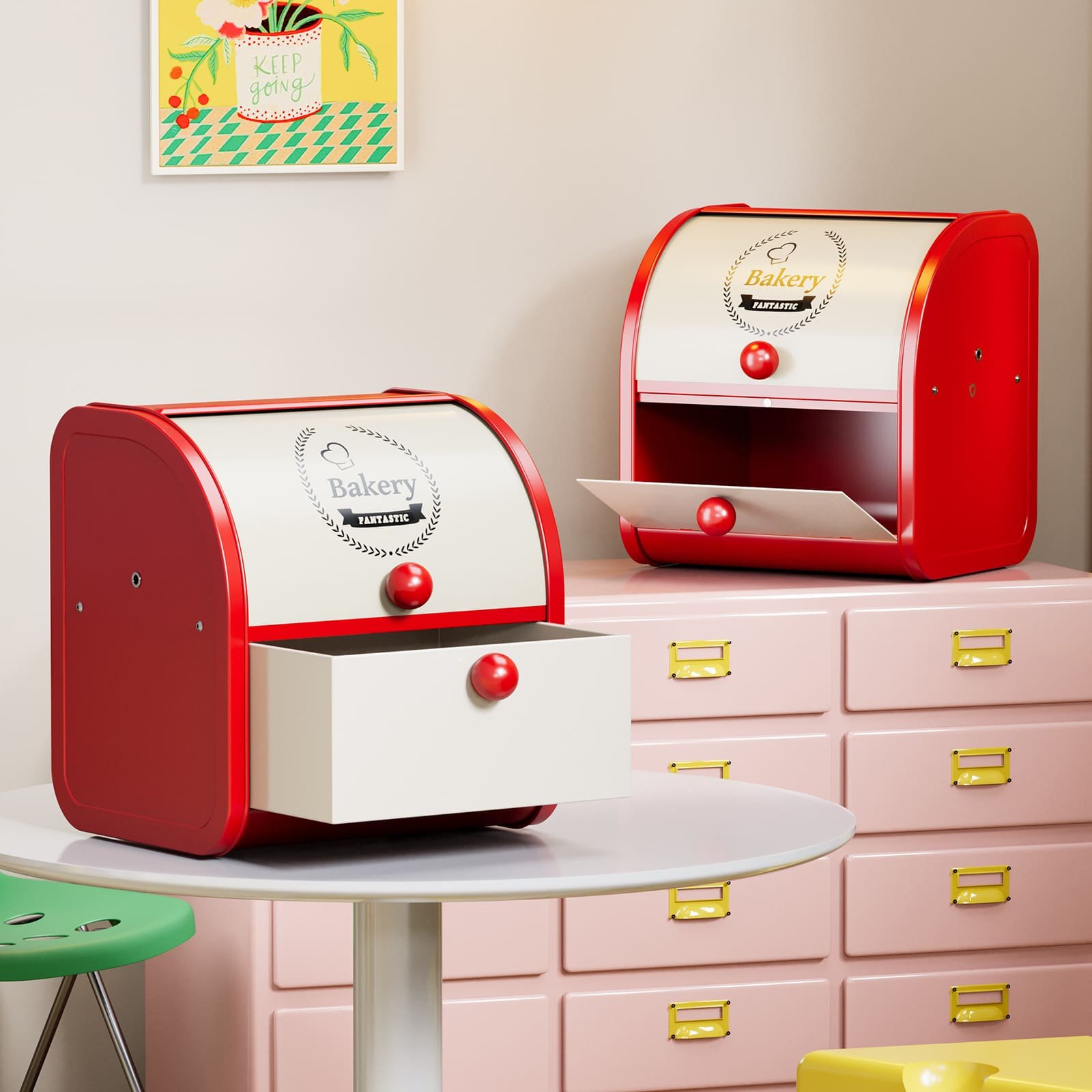
Transition Paragraph: You want practical guidance, not a lecture. I will keep this simple. I will show you how MOQs, tests, finishes, and channels shape the choice. You will leave with a decision path you can use today.
Are MOQs and tooling the real price drivers?
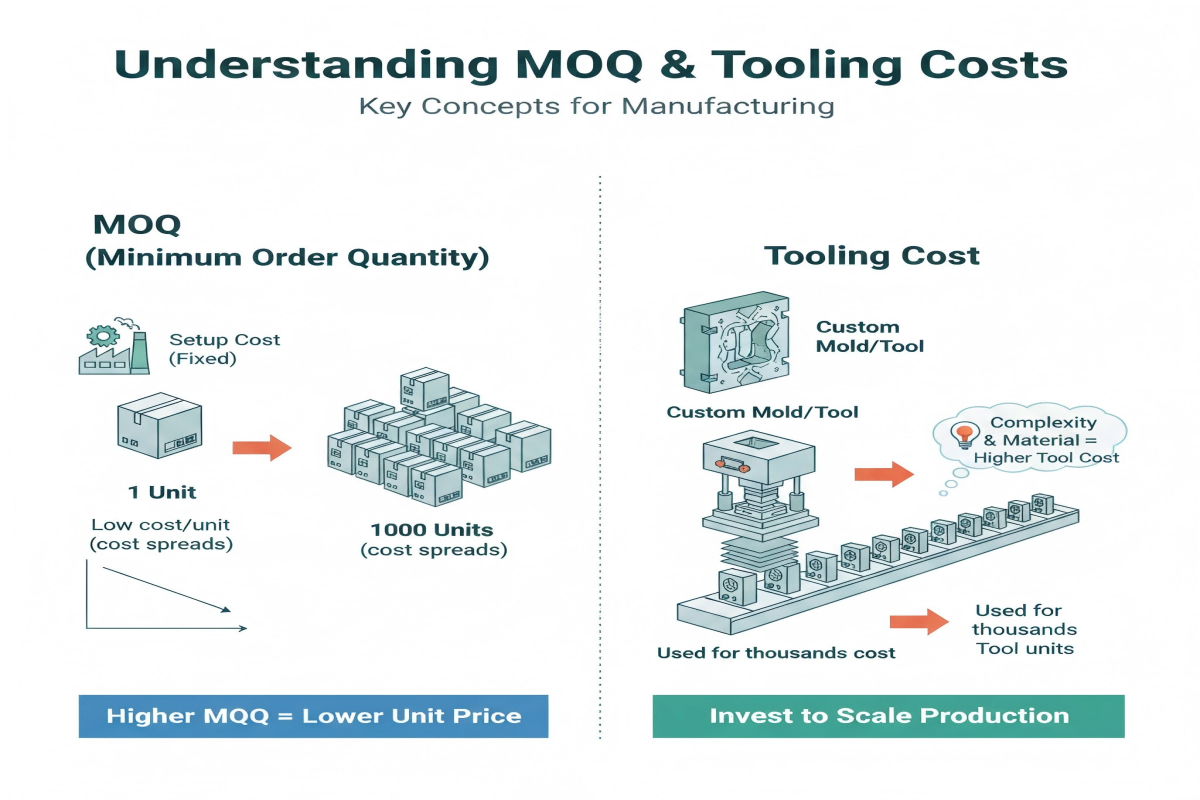
leading paragraph: Unit price looks low on paper. Then MOQs, molds, and setup fees explode the budget. I see this every season. The hidden math decides your profit, not the material label.
snippet paragraph: Metal is flexible on MOQ with modest tooling. Bamboo sits in the middle with steady MOQs and simple jigs. Plastic needs high MOQs and mold investment, but the unit price drops fast at scale.1
Dive deeper Paragraph:
What typical orders tell me
I look at the last several years of orders across brands and distributors. The patterns repeat. The material choice puts you into an MOQ band and a tooling mindset. That drives cash flow and timing more than anything else. The numbers below are common in my projects. Your exact quote may differ by design complexity and finish.
MOQ, tooling, and lead time at a glance
| Material | Typical MOQ Band | Tooling Cost Pattern | First Order Lead Time2 | Notes |
|---|---|---|---|---|
| Metal (steel)3 | 300–1,000 sets | Low–medium (bending dies, fixtures) | 35–60 days | Fast changes, good for tests and small pilots |
| Bamboo | 500–1,500 sets | Low (jigs, cutters) | 45–70 days | Stable, hand-work adds time, limited bright colors |
| Plastic (injection) | 2,000–5,000+ sets | High (molds) | 60–90+ days (mold build) | Scales well, best unit cost at volume |
What this means for you
- If you test a new SKU or channel, metal gives breathing room.
- If you sell a premium story with modest volume, bamboo stays manageable.
- If you have proven demand and cash for molds, plastic wins on unit cost.
Does “eco-friendly” bamboo always sell better?
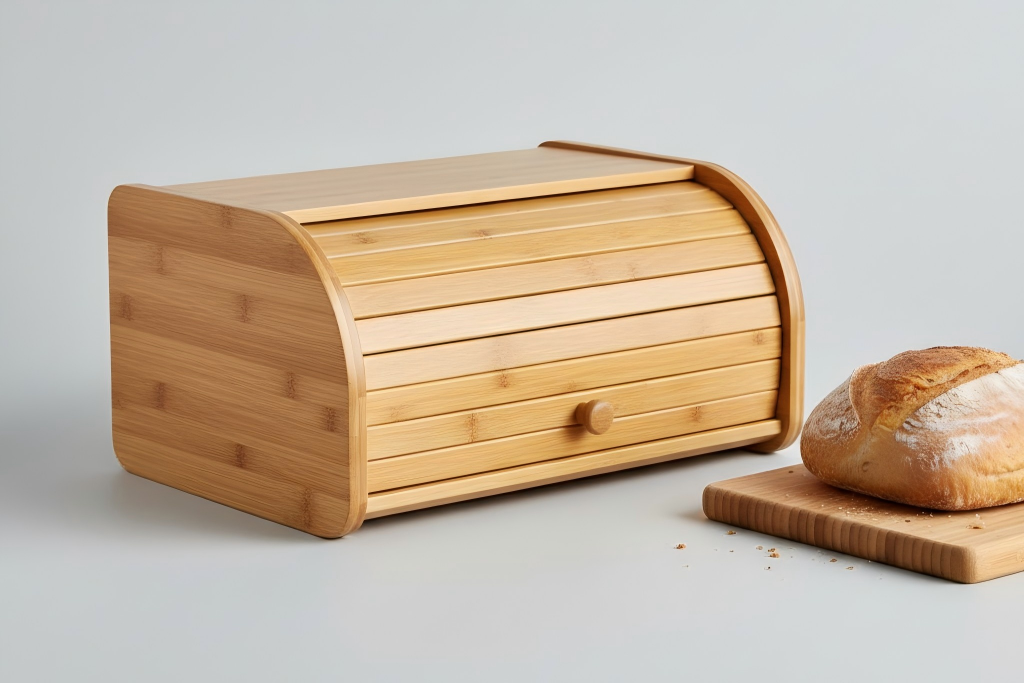
leading paragraph: Many buyers expect bamboo to boost sales. The story sounds good. The market does not always agree. I have seen bamboo win big and also stall on the shelf.
snippet paragraph: Bamboo wins in premium channels that accept a 30%+ price lift.4 In mid-market channels, metal’s durability message often converts better. Plastic wins entry price points and wide color palettes.
Dive deeper Paragraph:
What I hear from buyers
Buyers want a clear “green equals growth” rule. Real channels do not work that way. Shoppers compare price, feel, capacity, and look. Eco claims help, but only if the audience pays for it.
Channel behavior I see
| Channel Type | Customer Message That Converts | Price Tolerance | Material Fit |
|---|---|---|---|
| Discount chains | Price and capacity first | Low | Plastic or basic metal |
| Mid-market e-commerce | Durability + clean look | Medium | Powder-coated metal |
| Specialty kitchen stores | Natural story + finish | High | Bamboo with careful sealing |
What this means for you
- Bamboo supports a premium tag when the store tells the story well.
- Metal sells mid-market because it feels strong and looks clean.
- Plastic supports bright colors and bundle pricing for entry tiers.
- Do not guess. Ask your retailers what message they want to push.
What should I tell a factory before I ask for quotes?
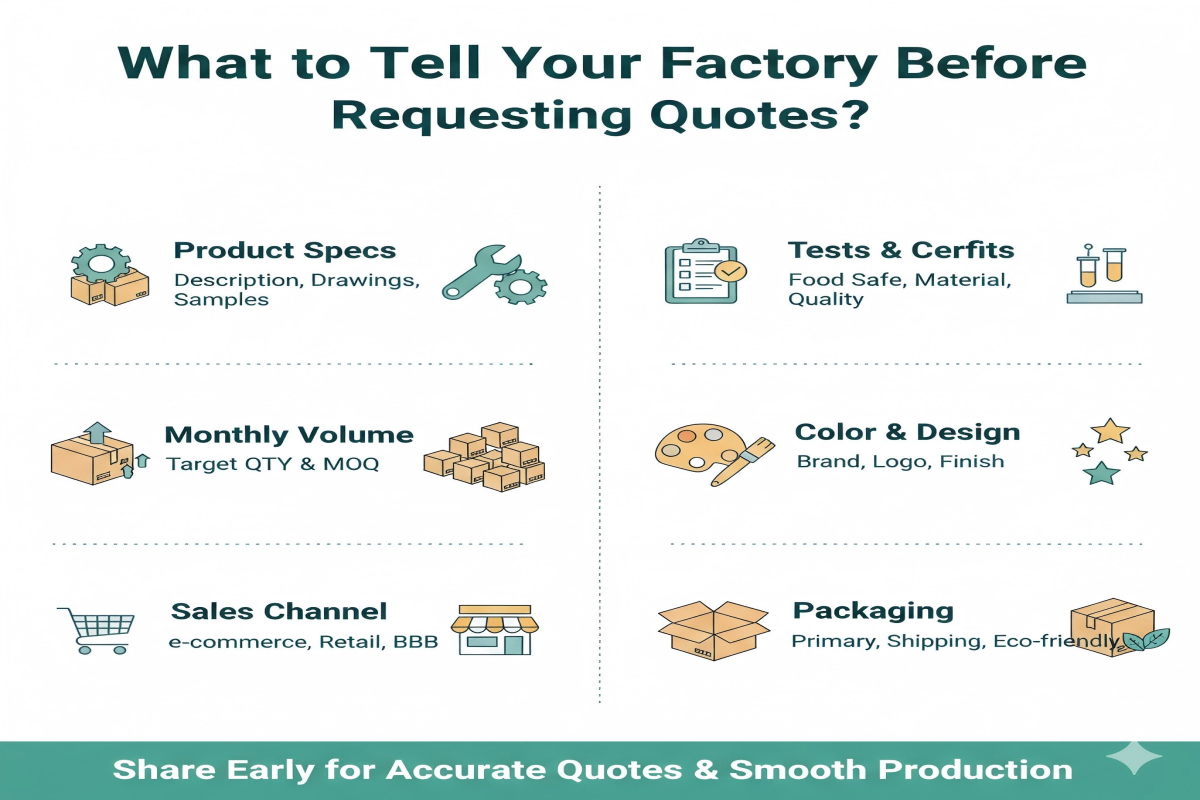
leading paragraph: “Which is best?” does not help me help you. I need your channel, price target, and tests. Without that, you get mismatched quotes and wasted samples.
snippet paragraph: Share channel, target retail, monthly volume, tests, color plan, and packaging early. This lets me quote real MOQs, finishing, and tooling, and it avoids sample rounds you do not need.
Dive deeper Paragraph:
What to prepare
Bring the basics to the first call or email. I do not need a long deck. I need clear, short bullets and a few references.
RFQ checklist that saves time
| Info I Need | Why It Matters | Common Pitfall |
|---|---|---|
| Target retail price | Sets the material tier | Asking for bamboo at entry price |
| Channel and region | Guides tests and messaging | Ignoring UK salt spray or CA65 |
| Forecast volume (test and scale) | Sets MOQ and mold logic | Committing to plastic without volume |
| Color and finish ideas | Impacts cost and lead time | Requesting impossible Pantone on bamboo |
| Packaging style | Affects carton size and drop test | Box too big, freight cost spikes |
| Required tests | Drives coating and plating choices | Budgeting after-the-fact for failures |
How I use this
- I map your retail to unit cost bands.
- I check tests early to lock finishes.
- I propose a pilot MOQ that makes sense.
- I flag where a mold helps or hurts.
How do finishes and colors change cost and timing?
leading paragraph: Finishes look like small details. They are not. They change unit cost, yield, and test risk. Color goals can push you into the wrong material if we do not align early.
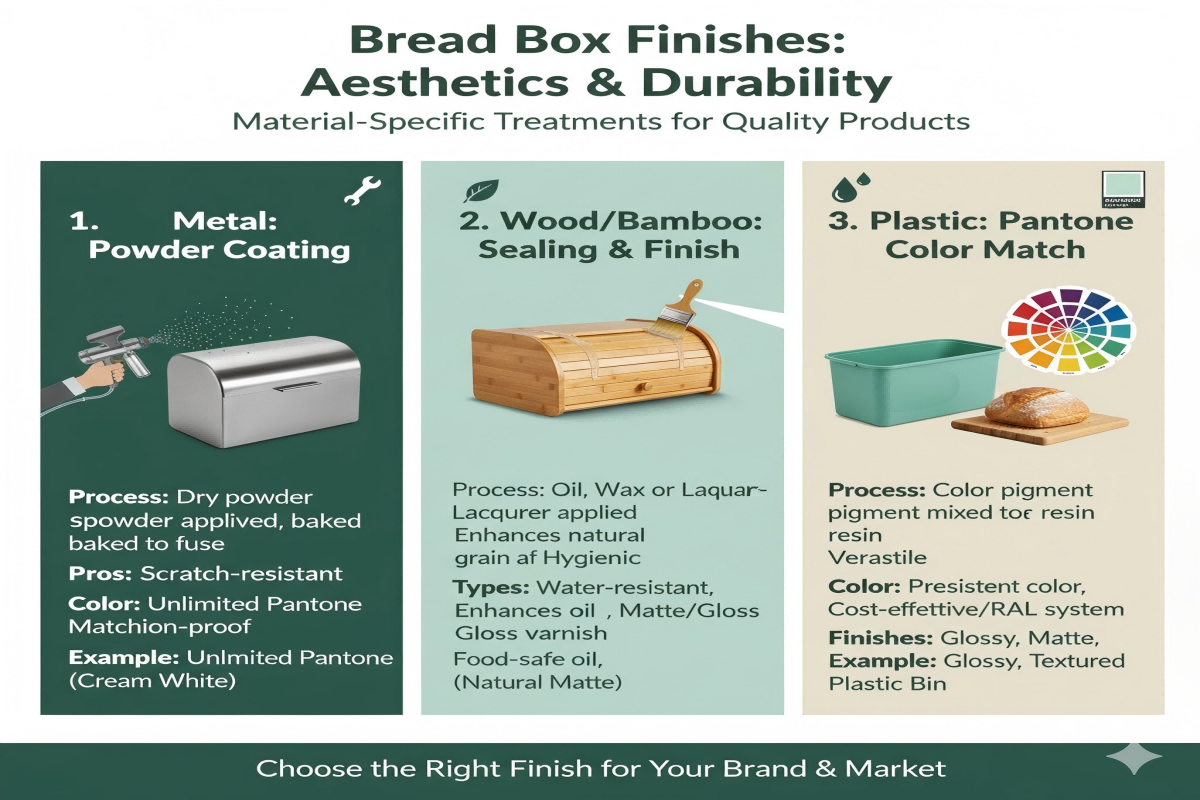
snippet paragraph: Metal needs powder coat or plating. Bamboo needs carbonization and sealing5. Plastic allows Pantone matching and textures.6 Each path changes cost, lead time, scratch visibility, and test planning.
Dive deeper Paragraph:
What each finish implies
Different finishes have different steps. Each step has rework risk and test needs. I plan for it in the quote so you are not surprised later.
Finish and color trade-offs
| Material | Common Finishes | Color Flexibility | Scratch Visibility | Lead Time Impact | Notes |
|---|---|---|---|---|---|
| Metal | Powder coat, electroplating | Good with powder coat | Low–medium | +7–14 days | Powder coat supports CA65-friendly systems7 |
| Bamboo | Natural, carbonized, clear seal | Limited, natural tones | Low on grains, edges need care | +7–10 days | Bright Pantones not feasible8; sealing is key |
| Plastic | Masterbatch Pantone, texture | High | Medium–high on glossy | Mold build adds weeks | Textured molds hide marks better9 |
Practical checks
- If you need bright, exact Pantone, plastic is safer.
- If you want matte durability, powder-coated metal is steady.
- If you want natural warmth, bamboo needs sealing and careful QC.
- Tell me your test plan so I pick the right coating system.
Which tests should I plan for in the US, UK, and France?
leading paragraph: Testing sneaks up on many first orders. A finish can pass one region and fail another. I plan tests with you early, so we do not repeat production.
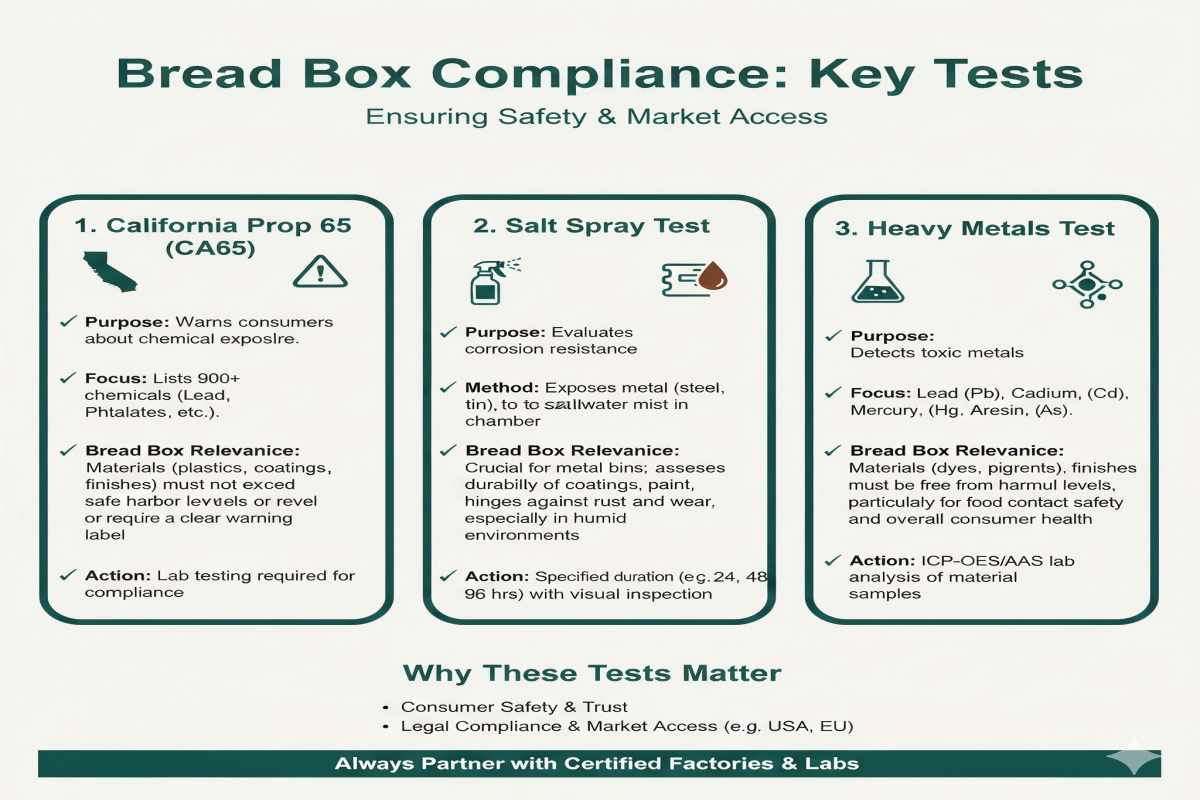
snippet paragraph: Common asks I see: CA65 in the US for coatings10, 24-hour salt spray in the UK for metal finishes11, and heavy metals for food contact in France when buyers request it12. Plan testing before color locks.
Dive deeper Paragraph:
What comes up most
I build quotes around tests I know will appear. Bread boxes are not always food-contact items. Some buyers still require food-contact heavy metals checks for peace of mind. I do not debate that. I plan for it.
Regional test focus I plan against
| Region | Common Request | Applies To | Why It Matters |
|---|---|---|---|
| United States | CA65 (coating systems) | Metal powder coat, plated parts, plastic pigments | Avoids restricted substances in finishes and colors |
| United Kingdom | 24-hour salt spray (finish durability) | Metal components and hardware | Screens poor powder coat or plating |
| France | Heavy metals for food contact (on request) | Surfaces that may contact food | Extra assurance; may affect coating choice |
How I align material and tests
- Metal: I select CA65-compliant powders and prepare for UK salt spray. If plating is needed, we test early panels.
- Bamboo: I use sealers that align with your market’s safety asks. Bright colors are limited, which reduces risk.
- Plastic: I choose pigments that align with CA65. I use textures to hide wear without rework.
How do I choose material with a simple decision path?
leading paragraph: You need a fast way to move from messy ideas to a clear decision. I use a short decision path. It keeps your quotes, samples, and launch on time.
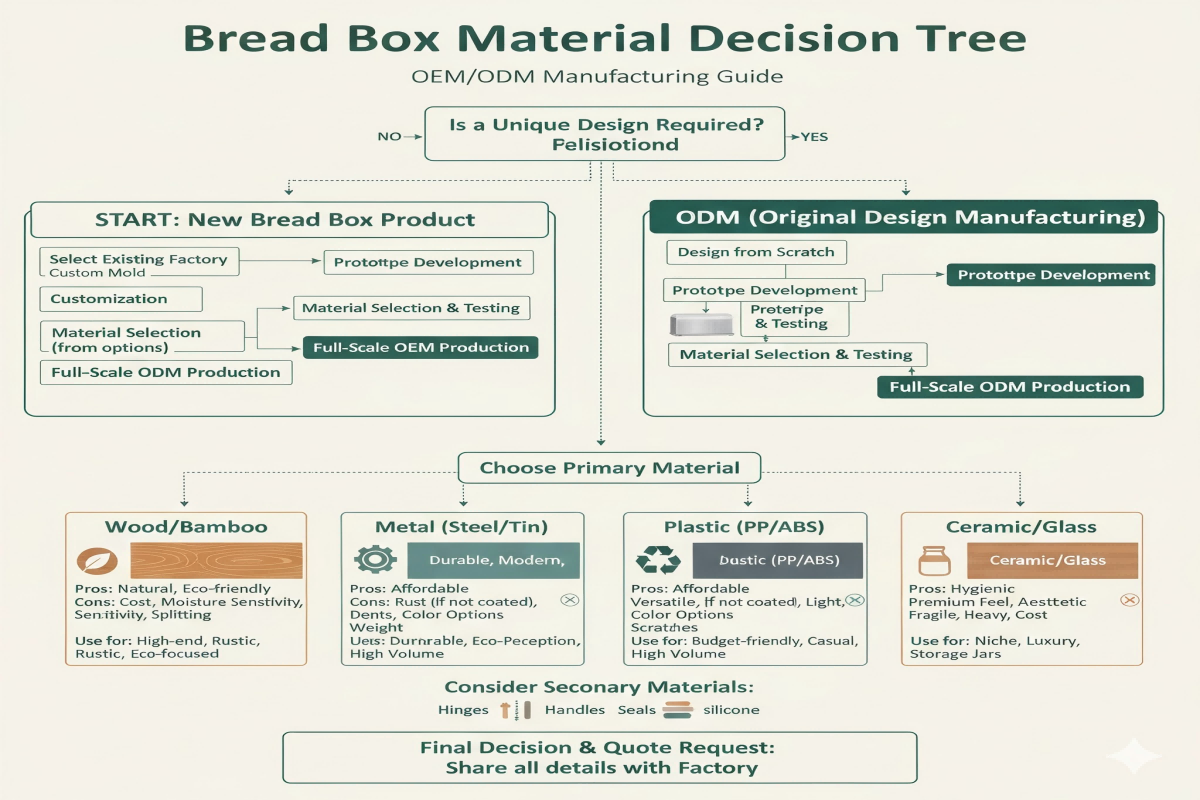
snippet paragraph: Start with your target retail and volume. Add your test plan and color needs. Follow the path to a likely material. Then fine-tune with MOQ and finish details.
Dive deeper Paragraph:
The quick decision path I use
The goal is to move fast without guessing. This path is not a ranking. It is a way to reach a starting point. Then we test samples against your channel.
Decision tree (start at the top)
| If This Is True | Then Start With | Watch-outs |
|---|---|---|
| Retail target is entry, colors must match Pantone, volume is high | Plastic | Mold cost and lead time; texture to reduce scratch look |
| Retail target is mid, durability story matters, you want flexible MOQ | Powder-coated metal | Plan UK salt spray; choose CA65-friendly powder |
| Retail target is premium, natural look, story-led display | Bamboo | Limited bright colors; sealing and carbonization timing |
| You need small pilot to test channel | Metal | Tooling is light; fast changes possible |
| Your buyer requires heavy metals food-contact test | Metal or Bamboo with safe sealing | Confirm test scope; choose compliant finishes |
| You need a bright gloss red that matches your brand | Plastic | Use masterbatch; confirm CA65 compliance |
| You want a matte black that hides wear | Powder-coated metal | Choose fine-texture powder; salt spray plan |
How to use it
- Pick the row that fits your retail and volume first.
- Check tests next. Confirm with me before color lock.
- Build a pilot MOQ you can sell through, then scale.
Conclusion
Pick by retail target, volume, tests, and color needs. Use the decision path to lock a starting material. Then sample, test early, and scale only when the story and numbers align.
"Is injection mold cost cheaper to produce than metal can? - Quora", https://www.quora.com/Is-injection-mold-cost-cheaper-to-produce-than-metal-can. Manufacturing engineering literature documents that metal fabrication typically requires lower initial tooling investment than injection molding, while injection molding achieves lower per-unit costs at higher volumes due to economies of scale in automated processes. Evidence role: general_support; source type: education. Supports: General manufacturing economics principles regarding MOQ flexibility and tooling investment across different materials and processes. Scope note: Specific MOQ ranges and cost ratios vary by product complexity, factory capabilities, and regional manufacturing conditions ↩
"The application of bamboo weaving in modern furniture", https://bioresources.cnr.ncsu.edu/resources/the-application-of-bamboo-weaving-in-modern-furniture/. Manufacturing lead times vary by process complexity: metal fabrication with existing tooling typically requires 4-8 weeks for production and finishing; bamboo processing with hand assembly adds time for material preparation and quality control; injection molding first orders include mold fabrication (4-8 weeks) plus production time, resulting in longer total lead times. Evidence role: general_support; source type: education. Supports: Typical manufacturing lead time components for different materials and processes. Scope note: Actual lead times depend on factory capacity, design complexity, order size, and supply chain conditions ↩
"In-Depth Comparison of Aluminum vs. Stainless Steel Cookware", https://www.cookwarecw.com/in-depth-comparison-of-aluminum-vs-stainless-steel-cookware-material-properties-health-impacts-and-selection-guide/. Steel (both carbon steel with protective coatings and stainless steel) is frequently selected for kitchen storage products due to its combination of formability, strength, cost-effectiveness, and availability; carbon steel requires surface finishing to prevent corrosion, while stainless steel offers inherent corrosion resistance at higher material cost. Evidence role: general_support; source type: education. Supports: Common metal materials used in kitchen storage product manufacturing and their selection criteria. Scope note: The article does not specify whether carbon steel or stainless steel is referenced ↩
"Factors Forming the Consumers' Willingness to Pay a Price ... - PMC", https://pmc.ncbi.nlm.nih.gov/articles/PMC6427680/. Consumer behavior research on sustainable products indicates that eco-friendly materials can command price premiums in certain market segments, though the exact premium varies by product category, target demographic, and retail positioning. Evidence role: statistic; source type: research. Supports: Consumer willingness to pay premium prices for sustainable and eco-friendly materials in household products. Scope note: The 30% figure is presented as a general threshold for premium channel acceptance rather than a precise market average ↩
"Effects of Heat Treatment under Different Pressures on the ... - PMC", https://pmc.ncbi.nlm.nih.gov/articles/PMC10385673/. Carbonization is a heat treatment process that darkens bamboo by caramelizing its natural sugars, creating a uniform brown color while slightly reducing hardness; sealing with oils, waxes, or clear finishes protects bamboo from moisture absorption and enhances durability for consumer products. Evidence role: mechanism; source type: education. Supports: Bamboo finishing processes including carbonization and sealing. ↩
"How Can You Master Pantone Color Matching in Plastic Injection ...", https://www.cavitymold.com/how-can-you-master-pantone-color-matching-in-plastic-injection-molding/. Injection molding with masterbatch colorants enables precise color matching to Pantone standards because pigments are uniformly distributed throughout the thermoplastic material; mold surface finishes (from high polish to textured patterns) transfer directly to molded parts, providing consistent surface appearance. Evidence role: mechanism; source type: education. Supports: Technical capabilities of plastic injection molding for color control and surface finishing. ↩
"Proposition 65 No Significant Risk Levels (NSRLs) and ... - OEHHA", https://oehha.ca.gov/proposition-65/general-info/proposition-65-no-significant-risk-levels-nsrls-and-maximum-allowable-dose-levels-madls. Powder coating manufacturers have developed formulations that avoid or minimize chemicals listed under California Proposition 65 by using alternative pigments, resins, and additives that do not contain lead, cadmium, or other restricted substances above safe harbor levels. Evidence role: mechanism; source type: research. Supports: Technical feasibility of formulating powder coatings without Proposition 65-listed chemicals. ↩
"Photodegradation and Photostability of Bamboo: Recent Advances", https://pmc.ncbi.nlm.nih.gov/articles/PMC9301731/. Natural bamboo's porous structure, color variation, and grain patterns limit the ability to achieve uniform, bright Pantone color matches; the material's natural tones show through most stains and dyes, making precise color matching difficult compared to synthetic substrates that accept pigments uniformly. Evidence role: mechanism; source type: education. Supports: Technical challenges in achieving bright, consistent colors on bamboo and other natural wood substrates. ↩
"Influence of surface texturing on scratch/mar visibility for polymeric ...", https://www.academia.edu/103226113/Influence_of_surface_texturing_on_scratch_mar_visibility_for_polymeric_materials_a_review. Textured surfaces diffuse light and create visual complexity that makes minor scratches and wear marks less noticeable compared to smooth, glossy finishes where surface defects create high-contrast reflections; this principle is widely applied in consumer product design to improve perceived durability. Evidence role: mechanism; source type: education. Supports: How surface texture affects the visibility of scratches and wear on plastic products. ↩
"Everyday Consumer Products and Places: Making Safer Choices ...", https://www.p65warnings.ca.gov/places. California's Safe Drinking Water and Toxic Enforcement Act of 1986 (Proposition 65) requires warnings for products containing chemicals known to cause cancer or reproductive harm, which applies to certain coating systems and pigments used in consumer products sold in California. Evidence role: definition; source type: government. Supports: California Proposition 65 requirements for consumer product coatings and finishes. ↩
"[PDF] en-iso-9227-2022.pdf", https://file.globalso.com/file_manage/3034/20250210/en-iso-9227-2022.pdf. International standards such as ISO 9227 specify salt spray (salt fog) testing procedures for assessing the corrosion resistance of metallic coatings, with test durations varying by application and performance requirements; UK buyers commonly reference these standards for metal consumer goods. Evidence role: general_support; source type: institution. Supports: Salt spray testing standards for evaluating corrosion resistance of metal coatings and finishes. Scope note: The 24-hour duration represents one common test threshold but is not a universal UK regulatory requirement ↩
"[PDF] Food Contact Materials - Regulation (EC) 1935/2004", https://www.europarl.europa.eu/RegData/etudes/STUD/2016/581411/EPRS_STU(2016)581411_EN.pdf. EU Regulation 1935/2004 establishes general safety requirements for materials intended to come into contact with food, and member states including France may have additional national provisions; buyers often request heavy metals migration testing to demonstrate compliance even for items with incidental food contact. Evidence role: general_support; source type: government. Supports: European Union food contact materials regulations that may drive buyer testing requests in France. Scope note: Bread boxes are not always classified as food contact items, so testing requirements depend on buyer interpretation and risk management practices ↩