How to Develop Private Label Kitchen Organization Products?
Developing private label kitchen products sounds exciting, right? But too often, it’s not the creative free-for-all clients imagine—it’s more like solving a puzzle while juggling risk and reward.
Private label kitchen product development requires aligning your design ideas with factory realities, balancing cost, timeline, and quality.1 Success depends on clear checkpoints to avoid delays, misunderstandings, and wasted resources.

When I work with wholesalers and distributors, I’ve noticed that most struggles during private label projects come from mismatched expectations. Let’s break down the mistakes, decisions, and steps you need to keep your project practical, not painful.
Do Private Label Products Mean Just Adding a Logo?
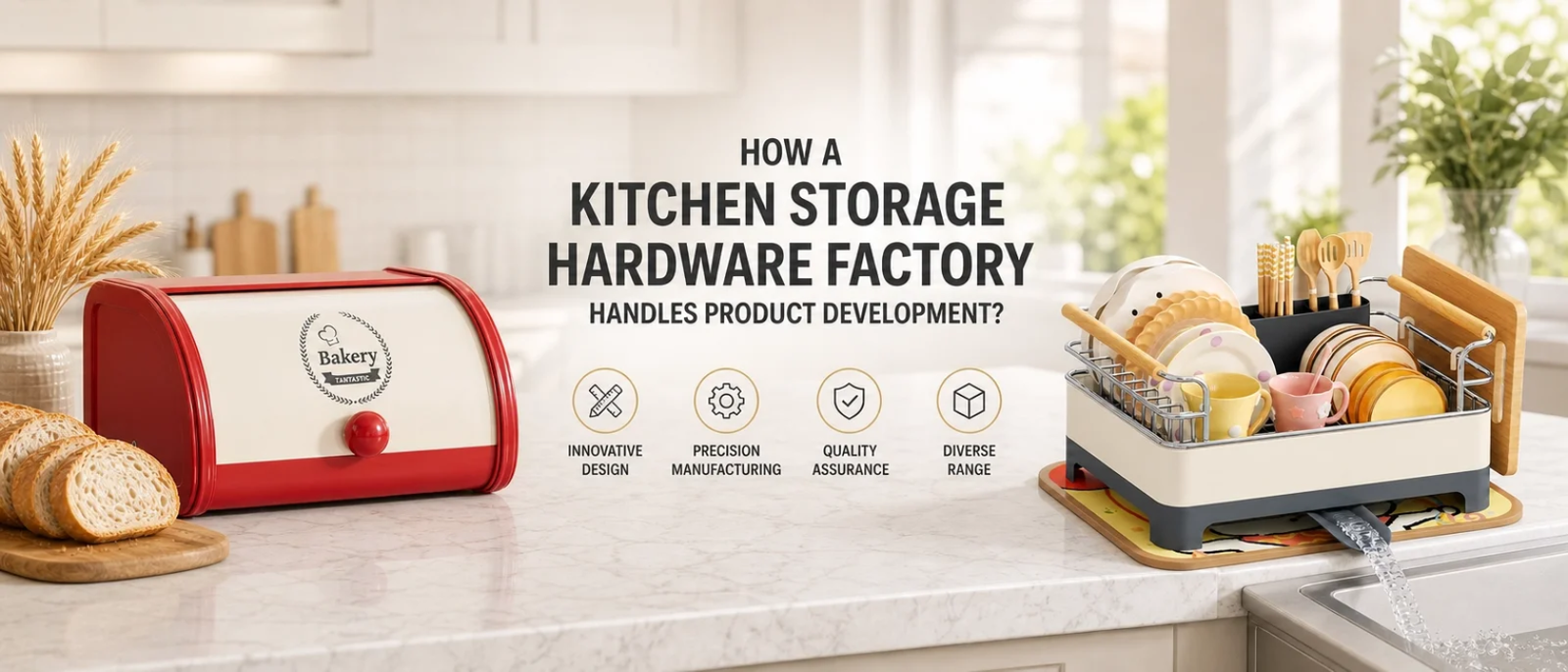
Some clients come to us thinking private label only means printing their logo on a breadbox or knife holder. It’s not their fault—this idea is super common because it feels simple and familiar. Unfortunately, this isn’t what true private label development is.
Private label projects often require new tooling, mold investments, or deep customization—not just branding tweaks.2 Adding design changes like unique dimensions or special features makes the project more complex than it might seem.
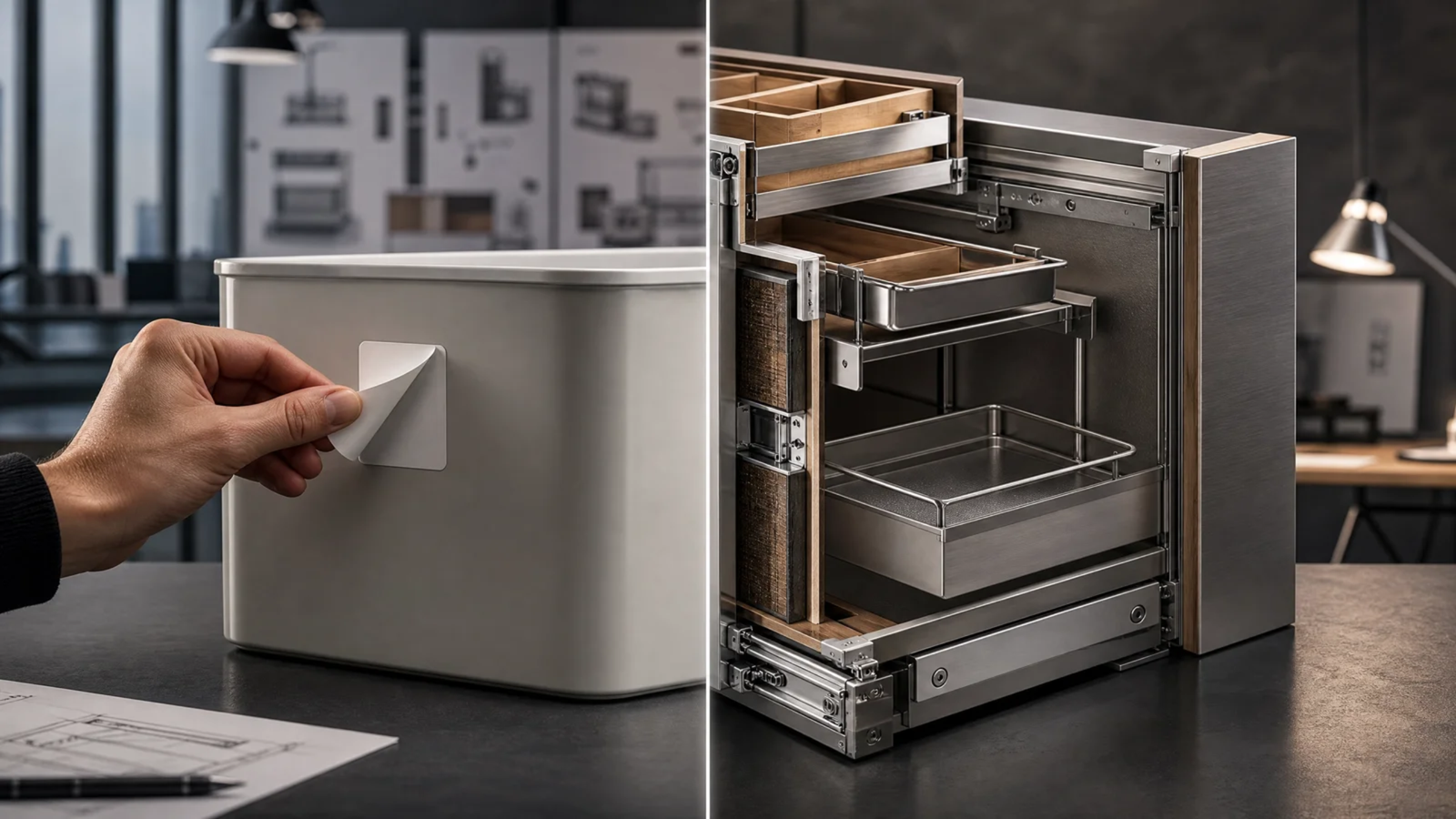
The key difference? If you're changing something beyond visuals (like materials, shape, or function), the factory essentially runs a new product development process. For instance, if you tweak a bread box's airflow vents or add magnetic closures, that isn’t just manufacturing; it’s manufacturing plus engineering.
What Should YOU Ask Before Jumping In?
Before committing, ask: “Does our design really change how this product functions or performs?” If the answer is yes, that’s where discussions about feasibility, costs, and lead time begin. Thinking too small at the planning stage is the fastest way to blow past your timeline or budget later on.
Why Do Small Minimum Order Quantities (MOQs) Lead to Big Trade-offs?
Everyone loves hearing they can start small. Fewer units, less risk—makes sense, right? But small MOQs aren’t always better if you're customizing products. Why? Factories operate on volume efficiency, which directly impacts both cost and what’s feasible for your design ideas.
Lower MOQs narrow your choices. For example, unique finishes like matte black powder coating or custom bamboo laminates require you to meet certain order thresholds3. Without enough volume, factories often can't absorb the setup costs, which means they’ll pass them on to you—or say no entirely.

Let’s put this into perspective. Say you want a high-gloss breadbox in an exact shade of cream. Getting that specific look needs custom painting or coating runs, which factories usually amortize over large orders. At 5,000 units this is spread out. At 500, it’s not, so it becomes disproportionately expensive.
How Can You Balance MOQ and Customization Needs?
Define what’s must-have versus nice-to-have in your design. If your budget locks in lower MOQs, simplify the customizations to avoid extra tooling or setup charges. It’s a trade-off every project has to consider—and should nail down early.
Are All Product Design Ideas Manufacturable?
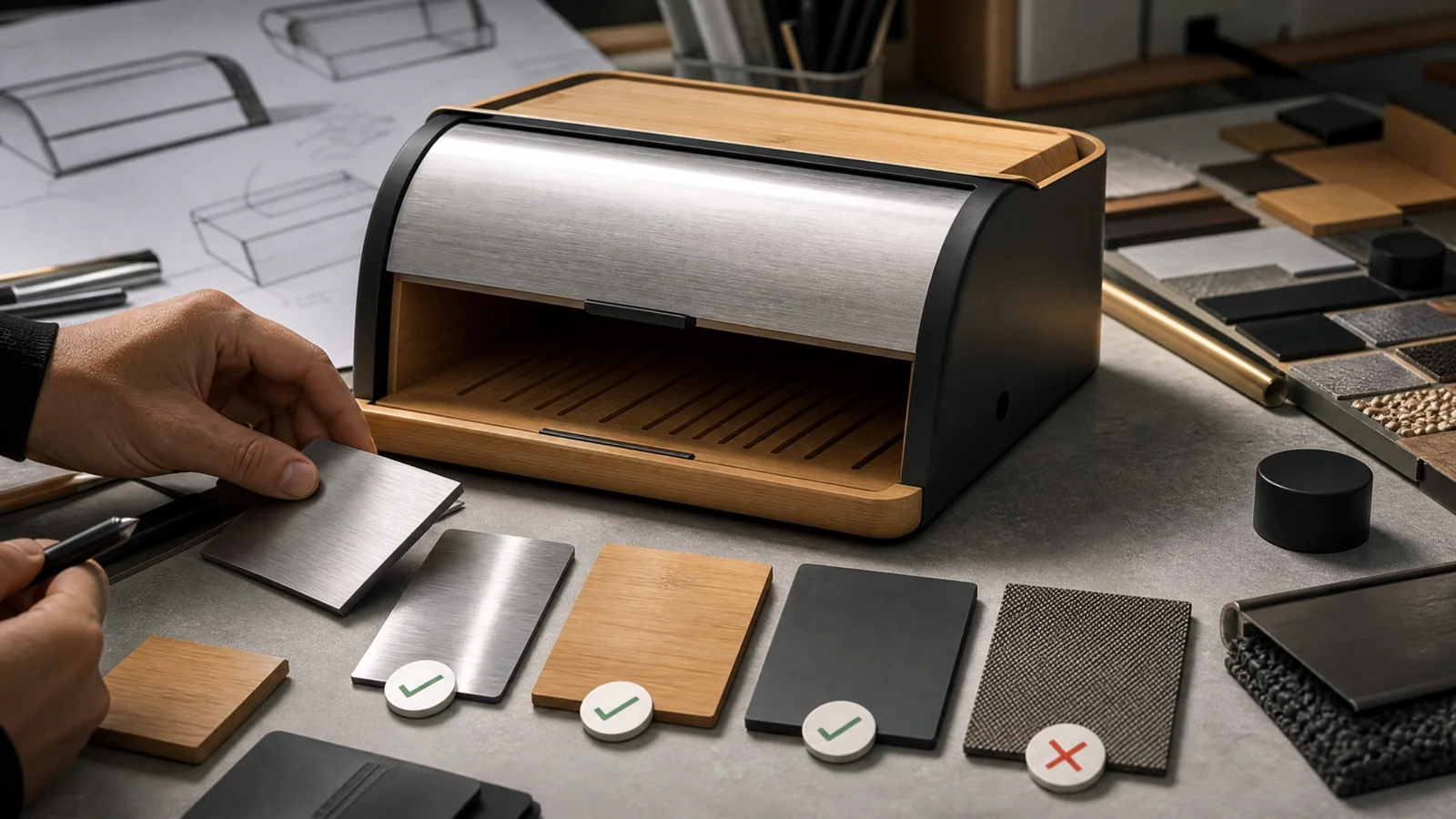
Here’s the truth no one tells enough: Not every design idea works in production. Factories don’t reject ideas because they lack creativity. Instead, it’s because certain designs simply clash with materials or processes. For example, those thin steel dividers you envision inside a storage rack? They might warp during coating or fail durability tests4.
Design ideas must align with technical boundaries. For example, curves and corners need a minimum radius for coating adhesion5, and thin bamboo panels might crack under load6. Ignoring these realities means costly delays from failed samples.
In one project I handled, the client wanted a rotating spice rack with ultra-narrow shelf gaps to fit “just about any bottle.” After the sample came back, the spacing warped during assembly because the plastic's flexibility didn’t support such tight tolerances. Fixing it meant redesigns for both the mold and assembly process—adding two months to the timeline.
How Can You Avoid These Pitfalls?
Early-stage discussions with your factory or supplier are critical. Treat sampling as a negotiation about capabilities, not just validation. During this phase, ask direct questions: “Can this airflow design hold up under production stress?” “Will our chosen finish cause delays?” Solve these sooner rather than later.
Can Compressed Timelines Work Without Rework?
Clients often feel private label timelines can flex. Faster sampling? Quicker tooling setup? Let’s just “move things along.” While understandable, some steps in private label development are fixed by processes. For example, certification (think FDA, LFGB, etc.) cannot start until AFTER a final sample is approved7, not during.
Compressing timelines without clear parallelization plans leads to delays, not savings. For example, you can handle packaging artwork and approvals during sampling but not material certifications or mold adjustments.
In one recent case, a client wanted dual-layer powder-coated dish racks8. They approved a sample but didn’t run durability tests until certification started. After coatings started chipping9, we had to redesign and resample, stalling the whole project by three months.
How Can You Prevent Timeline Anxiety?
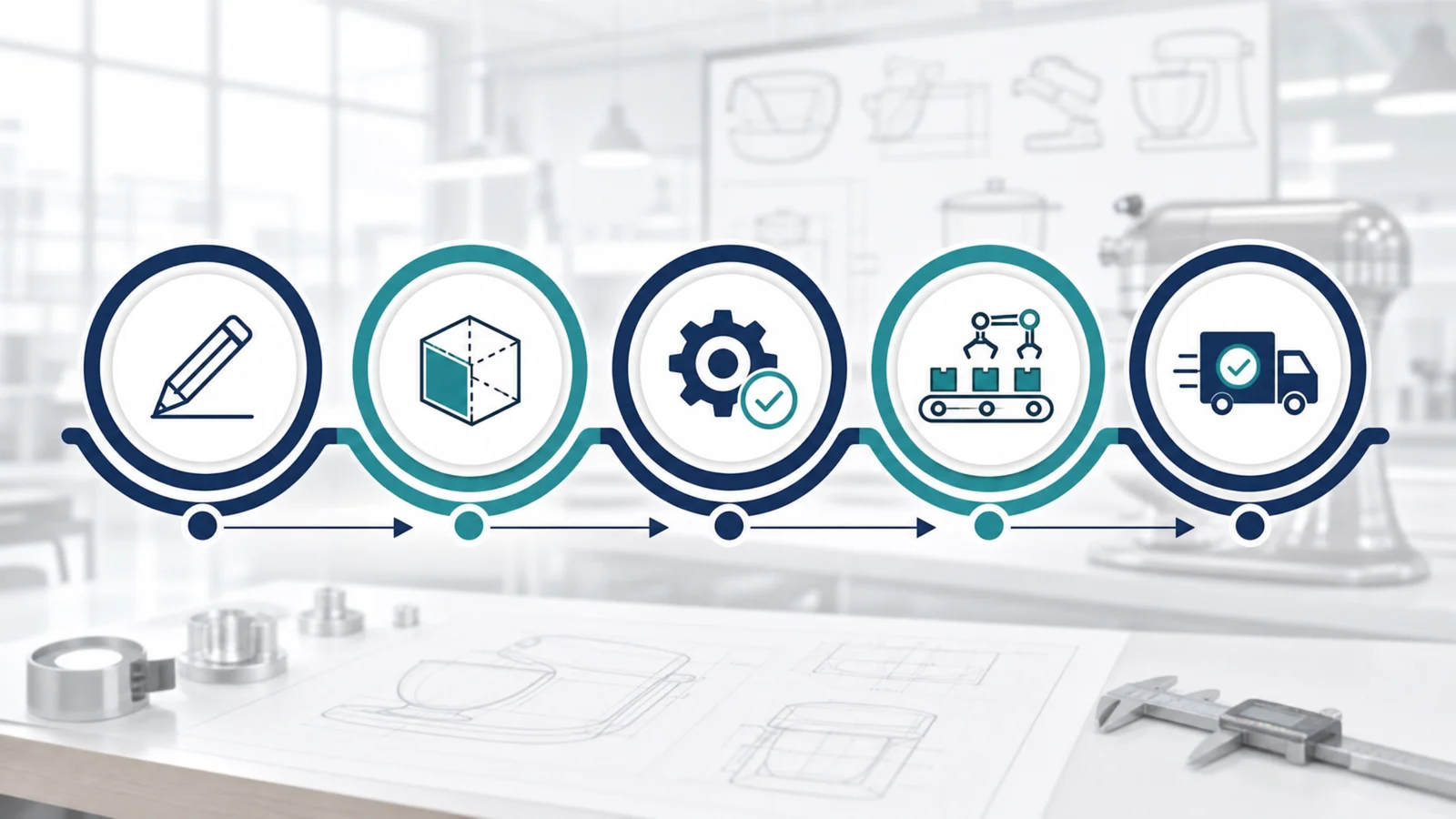
Separate parallel and sequential tasks ahead of time.10 For instance, while waiting for a mold sample, you can tackle packaging and labeling, but don't initiate certifications or mass production plans until that sample passes its test criteria. Planning smart prevents rushing poorly.
Conclusion
Private label kitchen product development is never a one-size-fits-all process. From start to finish, it’s a balancing act of aligning ideas, budgets, and production realities. The good news? Asking the right questions early and breaking the project into clear milestones saves time, money, and headaches down the road.
"Navigating new product development: Uncovering factors and ...", https://pmc.ncbi.nlm.nih.gov/articles/PMC10788447/. Product development literature consistently identifies the need to balance competing constraints including cost, quality, time-to-market, and technical feasibility, often described as the 'iron triangle' or multi-dimensional trade-off problem in manufacturing. Evidence role: general_support; source type: paper. Supports: that product development involves balancing multiple competing constraints. Scope note: General product development principles rather than kitchen-product-specific research ↩
"Top 10 Factors that Shape Injection Mold Tooling Costs", https://www.crescentind.com/10-factors-that-impact-injection-molding-tooling-costs. Manufacturing engineering defines custom tooling and mold development as capital-intensive processes that distinguish deep product customization from surface-level branding modifications, with tooling costs typically ranging from thousands to hundreds of thousands of dollars depending on complexity. Evidence role: definition; source type: education. Supports: that product customization requiring tooling or mold changes represents a distinct manufacturing category. Scope note: General manufacturing principles rather than private-label-specific documentation ↩
"[PDF] Comments on recommendation for Submission batch size for ...", https://downloads.regulations.gov/FDA-2012-D-0938-0034/attachment_1.pdf. Surface finishing processes such as powder coating involve significant setup costs including equipment cleaning, color changes, curing oven temperature adjustments, and quality control calibration, making small batch runs economically inefficient and leading manufacturers to establish minimum order quantities. Evidence role: mechanism; source type: education. Supports: that specialized coating and finishing processes have economic batch size minimums. Scope note: General coating process economics rather than specific threshold documentation ↩
"8. Assessing Product Reliability - Information Technology Laboratory", https://www.itl.nist.gov/div898/handbook/apr/apr.htm. Product development methodology includes durability and reliability testing as essential validation steps, using standardized test protocols to simulate expected use conditions, stress testing, and accelerated aging to identify potential failure modes before mass production, reducing warranty costs and ensuring customer satisfaction. Evidence role: general_support; source type: education. Supports: that durability testing is standard practice in product development. ↩
"7.4 Quality Assurance Requirements - Caltrans - CA.gov", https://dot.ca.gov/programs/equipment/paint-coating/7-4-quality-assurance-requirements. Coating engineering principles indicate that sharp corners and tight radii create challenges for uniform coating application and adhesion due to edge effects, electrostatic field concentration in powder coating, and surface tension issues in liquid coatings, with industry guidelines typically recommending minimum radii to ensure coating integrity. Evidence role: mechanism; source type: education. Supports: that coating processes have geometric limitations related to adhesion. Scope note: General coating principles rather than specific minimum radius standards ↩
"Tensile Behavior and Failure Mechanism of Bamboo Fiber Bundle ...", https://pmc.ncbi.nlm.nih.gov/articles/PMC12155820/. Materials research on bamboo demonstrates that its mechanical strength is anisotropic and thickness-dependent, with thin sections exhibiting reduced resistance to bending stress and increased susceptibility to splitting along fiber directions, particularly when subjected to point loads or impact. Evidence role: mechanism; source type: paper. Supports: that bamboo has thickness-dependent mechanical properties affecting crack resistance. ↩
"Laboratory Accreditation for Analyses of Foods (LAAF) - FDA", https://www.fda.gov/food/food-safety-modernization-act-fsma/laboratory-accreditation-analyses-foods-laaf-program-final-rule. Regulatory certification processes for food-contact materials typically require testing of samples that accurately represent the final commercial product in composition, processing, and intended use, as test results are specific to the tested configuration and cannot be extrapolated to modified designs. Evidence role: general_support; source type: government. Supports: that certification testing requires representative final samples. Scope note: General certification principles rather than specific FDA or LFGB procedural documentation ↩
"Powder coating - Wikipedia", https://en.wikipedia.org/wiki/Powder_coating. Powder coating technology includes multi-layer application methods where a base coat is applied and partially or fully cured before a top coat is added, used to achieve specific aesthetic effects, enhanced durability, or functional properties, though requiring careful process control to ensure inter-layer adhesion. Evidence role: mechanism; source type: education. Supports: that multi-layer powder coating is an established finishing technique. ↩
"[PDF] The mechanics of coating delamination in thermal gradients", https://groups.seas.harvard.edu/hutchinson/papers/TBC-CMASdelam.pdf. Coating failure analysis identifies chipping and delamination as common failure modes in powder coatings, typically resulting from inadequate surface preparation, contamination, improper curing conditions, coating thickness issues, or substrate-coating thermal expansion mismatch, emphasizing the importance of process control and compatibility testing. Evidence role: mechanism; source type: education. Supports: that coating adhesion failure is a recognized failure mode with multiple potential causes. ↩
"Concurrent engineering", https://en.wikipedia.org/wiki/Concurrent_engineering. Project management methodology, particularly critical path analysis and concurrent engineering approaches, emphasizes identifying task dependencies to distinguish activities that can proceed in parallel from those requiring sequential completion, enabling timeline optimization and resource allocation efficiency. Evidence role: mechanism; source type: education. Supports: that identifying task dependencies and parallelization opportunities is fundamental to project management. ↩